By David Muleele
GERMISTON - The Ekurhuleni West TVET College recently hosted a week-long advanced lecturer training programme under the internationally recognised TRAINME 3 initiative, aimed at strengthening Technical and Vocational Education in South Africa through modern industrial technologies and practical skills development.
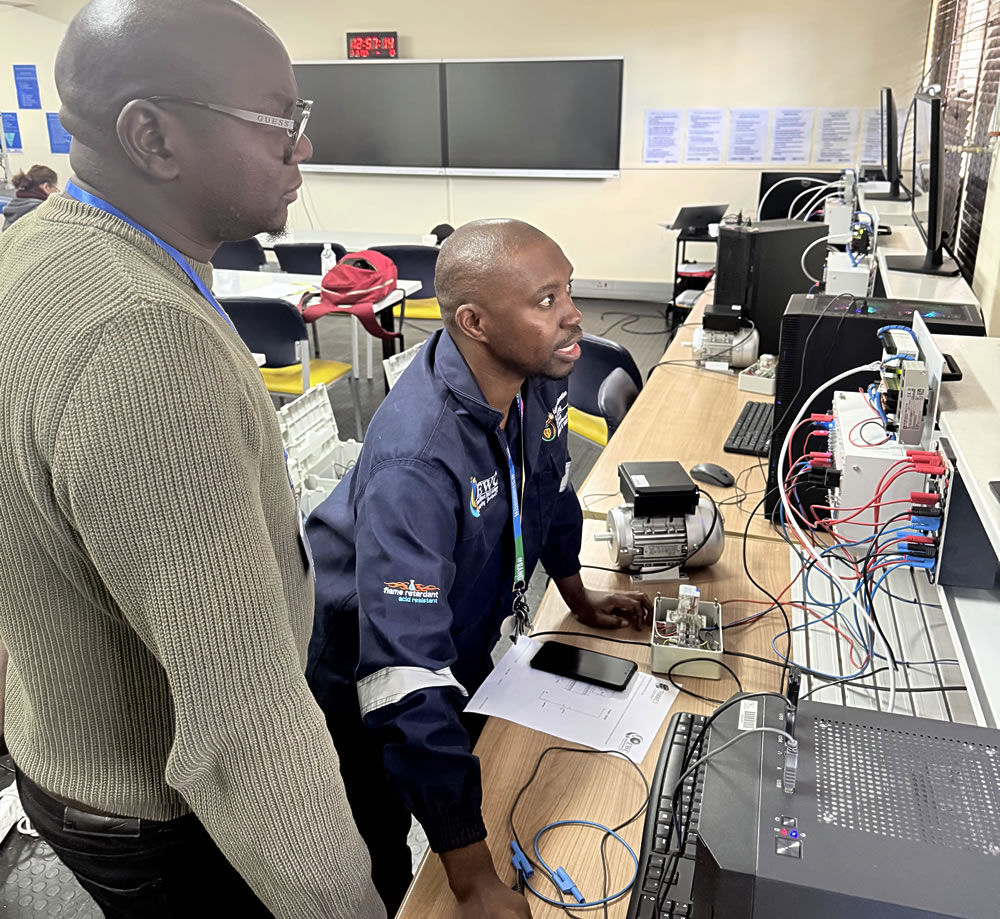
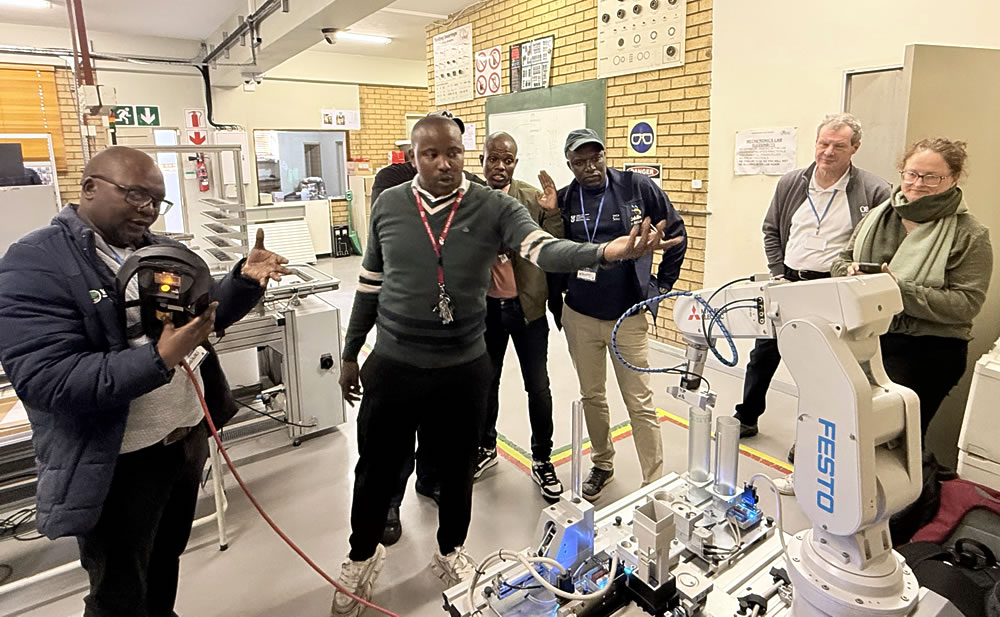
The training took place from 04 – 08 May at the Germiston Campus and brought together TVET lecturers from various colleges across South Africa. Participants received certificates of attendance after completing the intensive programme focused on mechatronics, robotics, industrial automation and modern technologies linked to the Fourth Industrial Revolution (4IR).
Speaking during the programme, Carina Adam, TRAINME project manager, explained that TRAINME began in 2017 when the German Federal Ministry launched an initiative to internationalise Vocational Education and Training. The ÜBZO Inter-Company Training Center and the University of Stuttgart jointly applied for funding to support the professional development of South African TVET lecturers.
"Our concept convinced the reviewers, and the project was awarded funding," said Adam.
She explained that the programme evolved from the original TRAINME project into TRAINME 2, which focused on digitalisation, and has now expanded into TRAINME 3, which officially started in March 2025 and will continue until August 2027.
TRAINME 3 focuses on specialised fields including mechatronics, energy and water management, and renewable energies. The programme includes the design of training modules based on curriculum and industry needs analyses, testing of blended learning modules, qualification of lecturers as master trainers and multipliers, as well as ongoing scientific research and evaluation.
The initiative is jointly implemented by the ÜBZO Inter-Company Training Centre and the University of Stuttgart, with funding from the German Federal Ministry for Education, Family Affairs, Senior Citizens, Women and Youth, and support from South Africa's Department of Higher Education and Training.
The TRAINME team consisted of Carina Adam, TRAINME Project Manager; Helmut Windschiegl, International Trainer at the ÜBZO, and Simon Kammeyer, Academic Staff Member and PhD Researcher at the University of Stuttgart. Robert Neuber served as videographer and was responsible for filming and editing the training videos, which will be made available online.
Among the local facilitators were Hlatshwayo Calvin and Ledwaba Arnold, who participated alongside fellow lecturers from other TVET colleges.
Their previous training included industrial robot simulation systems and control systems delivered by BBW Germany in the field of Mechatronics Engineering Dual Systems, combining practical industry experience with theoretical learning.
The TRAINME3 programme covered modern industrial concepts such as robotics, automation, mechatronics and 4IR technologies, equipping lecturers with skills that can be directly transferred to students at South African TVET colleges. The programme combined technical experiments and hands-on classroom training with theoretical and pedagogical foundations.
Mr Hlatshwayo and Mr Ledwaba supported the TRAINME team by providing insights into their teaching within the framework of the mechatronics occupational programme over the course of two days.
Organisers highlighted that the programme represents an important step toward improving vocational education quality and strengthening partnerships between South Africa and Germany in technical and engineering education.